
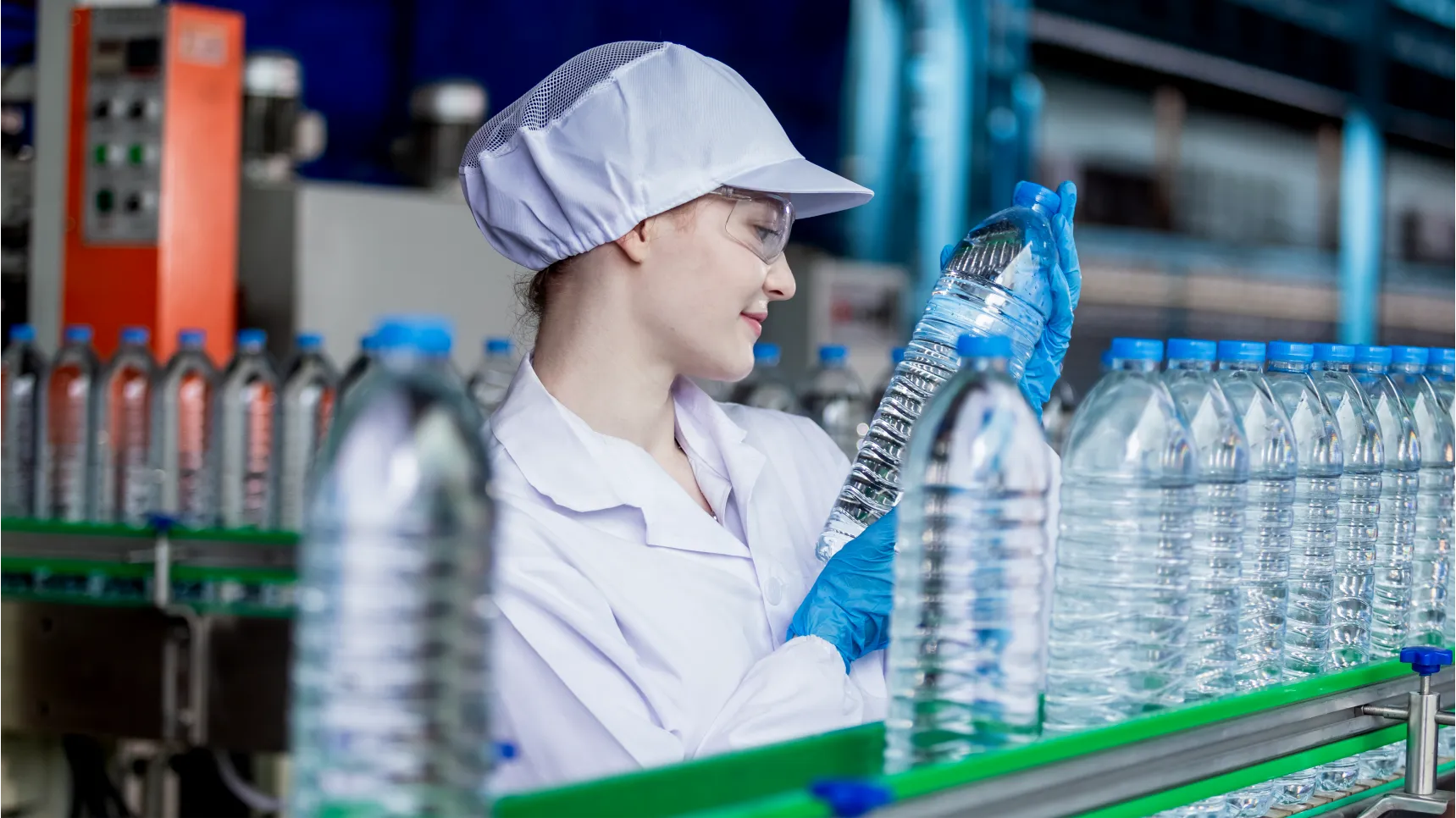
India is thirsty – and not just metaphorically. The demand for packaged drinking water has never been higher, given the population of over 1.4 billion, the growing urban centres, the poor quality of tap water and the health-conscious middle class who are ready to spend on safe drinking water. Should you be thinking of a packaged drinking water plant system in India, you are looking at one of the fastest-growing, recession-proofing businesses in the food and beverage industry in India.
This guide is designed to provide serious business owners, investors and entrepreneurs with more than surface-level information. Here, you will discover a comprehensive, real-life and thoroughly studied roadmap for choosing the location of your plant, up to receiving your BIS certification, so you can start your water-bottling plant business with a lot of confidence and understanding.
Overview: How to Set up a Packaged Drinking Water Plant?
The establishment of a packaged drinking water plant in India entails the identification of a source of water that would be reliable, a purification system (which is usually reverse osmosis, UV and ozonation), the installation of appropriate bottling plant equipment, BIS and FSSAI licences and a distribution network. The investment depends on the size of the set-up, with approximately 25 lakhs needed to invest in a small-scale set-up and over 3 crores needed to invest in a large automated set-up. When properly guided, rightly compliant with good equipment, a properly run packaged drinking water business can be profitable within 18 to 36 months of operation.
What Is a Packaged Drinking Water Plant?
A packaged drinking water plant is a food-grade manufacturing plant which gathers water via a natural or municipal source, exposes it to several purification and treatment procedures and then packages the product as a commercial item in labelled and sealed containers. These plants are run on stringent quality frameworks established by the Bureau of Indian Standards and the Food Safety and Standards Authority of India, whereby all the bottles delivered to a consumer have passed the set safety standards.
The manufactured product in these plants, which is popularly referred to as 'packaged drinking water' or 'packaged natural mineral water', is different from beverages or flavoured drinks. It is also subject to its quality standards: IS 14543 packaged drinking water and IS 13428 packaged natural mineral water. It is important to learn about this regulatory environment initially to establish a compliant and sustainable operation.
Market Opportunity and Business Potential in India
The statistics convey a strong narrative. The packaged water market in India is estimated to have been worth more than 20,000 crore in recent years and is set to increase by a CAGR of more than 20% in the next 10 years. The per capita consumption of bottled water in India is still very low compared to the rest of the world, meaning that the market has tremendous potential to expand as the purchasing power and the awareness of water diseases grow.
This demand is being driven by a number of structural trends. Consumers in rural and semi-urban India are moving towards packaged alternatives due to groundwater pollution in large areas. The customer base in tier-2 and tier-3 cities where the established national brands have skinny distribution is growing because of rapid urbanisation. The thriving hospitality, food service and institutional markets – offices, hospitals, schools and factories – are causing a surge in bulk water that smaller regional suppliers are well-placed to provide.
Profitability of the packaged drinking water business is high, as the cost of the raw material is low in comparison to the selling price and after the plant is established, the recurrent costs will be more or less fixed. Local players investing in quality and establishing significant local distribution usually prove superior in their domestic markets merely because of the quicker delivery cycles, reduced logistics expenses and improved relationship-driven sales.
Packaged Drinking Water Plant Setup Process
Step 1: Location Selection
The decision about the right location is probably the most important in the whole setup process, and, strangely enough, it is a decision that is usually hastened by a first-time entrepreneur. There are a number of criteria that your plant location must meet.
First, it has to be close to a good and consistent water source – be it a borehole, a natural spring or a water supply connection in the town. The nearer to your source, the lower the costs of transportation and storage of raw water. Second, it should contain a sufficient power supply, as the RO systems, pumps, and filling machines are power-intensive machines. Third, the location needs to be well connected by road to facilitate outbound logistics and facilitate distribution.
Regulation wise, your plant should not be situated in an area that is ecologically sensitive or in a limited area around water bodies. Minimum distance separating residential areas as well as other land use restrictions are also outlined in state pollution control board guidelines. Industrial areas, or in most states MIDC plots, offer infrastructure, including power, drainage, and road access, which is ready-to-go and can save you a lot of time and money on civil construction.
Step 2: Identification and testing of water sources
Upon shortlisting the location, a water quality test has to be done in a NABL-approved laboratory. This test examines raw water in terms of physical (colour, turbidity and odour), chemical (TDS, pH, hardness, iron, nitrates, fluorides and heavy metals) and microbiological parameters (total coliforms, E. coli and fungal count).
The outcomes of the test directly affect your design of a water treatment process. A more intensive RO system with high pressure and possibly multi-pass systems will be required with high TDS water. Water that contains high levels of iron or manganese needs special pre-treatment. Knowing what is present in your source water prior to investing in equipment helps avoid retrofitting it at a later time.
Step 3: Plant Layout Planning
Planning the layout is not merely a matter of filling in the space with the machines. It involves the design of a logical, hygienic, and workflow-optimal system in which water flows through the treatment process to packaging with a minimum risk of contamination and maximum operational efficiency.
The principles of a properly designed plant layout include one-way flow: on one end, raw water is introduced, and then it flows through treatment areas to the filling and packaging section, where it is discharged through a dispatch bay. Structural prevention of cross-contamination of raw water handling areas and finished product zones should occur. The design should also provide space for laboratory testing, storage of packaging material, finished goods warehousing, utilities where generators and transformers are located and the administrative offices.
At this point, savings of colossal time and money can be made working with an experienced plant design staff. Pattern recognition in layout design can be brought about by engineers who have already established several facilities and cannot be duplicated by first-time businessmen through theory alone.
Step 4: Machinery Selection
The choice of machinery should be calculated for your production capacity goals and budget. It is as bad as undercapitalising and being incapable of responding to the demand as overcapitalising on the machinery that your market cannot take. The capacity choice at the appropriate automation level that suits your present stage is a complex decision that needs both technical and business acumen.
Step 5: Installation and Trial Run
When machinery is brought on site, the installation process starts. Machines are situated The machines are installed based on their completion via food-grade piping and electrical systems and adjusted to the particular parameters of your water supply. Once complete installation is done, a trial production run is then undertaken to verify all the parts of the system under real working conditions. Trial run water samples are delivered to an accredited laboratory and only after results show that the water meets all the requirements of the BIS, is production started on a commercial basis.
Machinery and Equipment Need for a Packaged Drinking Water Plant
The equipment that is needed to carry out the bottled water production process can be broadly classified into water treatment equipment and packaging line equipment. The following is a concise, realistic description of the work of each machine and its importance.
Water Treatment Equipment
Raw water storage tank serves as the main buffer tank which can maintain a constant supply of feed water to the treatment system despite the changes in the source supply. It is usually composed of food-grade polyethylene or stainless steel.
The first active treatment stage is the multi-grade sand filter which physically removes suspended solids, sediment and turbidity in the raw water. It has beds of various grades of sand and gravel which entrap finer particles as water flows through.
The activated carbon filter is next, where it adsorbs the chlorine, organic compounds, pesticides and odour- and taste-causing substances. Removal of chlorine is of special concern to ensure that the downstream RO membranes are not damaged by oxidation.
Ion exchange resin is used by the water softener to purify the feed water by eliminating the hardness of calcium and magnesium, which reduces the formation of scale on the pipes, membranes and heat exchanger. It greatly increases the life cycle of downstream equipment.
The antiscalant dosing system is used to inject the required amount of antiscalant chemical into the feed water prior to entry into the RO membranes, which offer extra protection against mineral scaling and fouling.
The centre of the water purification system is the high-pressure RO system; it is used to eliminate dissolved solids, heavy metals, bacteria, viruses and chemical contaminants using semi-permeable membranes under pressure. The RO system has the ability to eliminate TDS that are in hundreds or thousands of parts per million to single digits.
The UV sterilisation unit forms a final disinfection barrier as purified water is subjected to UV light, killing any remaining microorganisms which may have survived in the previous phases.
Ozone is generated on-site in the ozone generator and injected into the purified water to be filled. Ozone is the strongest disinfectant applied to treat water and also offers a protective residual effect within the bottle that is closed.
The mineral dosing system enables the addition of the necessary minerals, including calcium and magnesium, to the filtered water in a controlled manner, enhancing the taste and satisfying the regulatory standards on minimum mineral content where such standards exist.
Packaging Line Equipment
The automatic bottle rinsing system rinses the inside of each bottle with high-pressure jets of purified or ozonated water before being filled up and eliminates dust or contaminants.
The automatic liquid filler machine precisely and automatically fills each bottle with a specific volume of purified water at a high rate. Volumetric fillers of modern days are within a fraction of a millilitre and this process makes sure the net volume declarations comply with regulations.
The automatic capping machine places a uniform amount of torque to put tamper-evident caps onto filled bottles, forming a hygienically secure, airtight seal.
The automatic labelling machine uses labels which are pre-printed and attached to the sealed bottles in a precise manner and supports various bottle sizes and shapes.
The shrink-wrap packaging machine selects the bottles and puts them in retail packs and coats them with heat-shrinkable plastic film forming clean and compact units to be distributed.
To handle large-scale processes, a blow moulding machine is installed in-house, which makes use of PET bottles directly out of preforms, which are highly cost-effective in comparison with externally sourced bottles and give full control over the quality of bottles and supply.
JPEE ENGINEERS is a provider of the entire scope of water treatment and packaging line equipment, providing turnkey solutions for the plant, including the raw water tank and final packaging station. Their technical department takes care of equipment sizing, layout integration, and installation, and thus they are a convenient one-stop provider for the entrepreneur who desires a hassle-free and professionally implemented plant setup.
Cost of Installing a Packaged Drinking Water Plant in India
Realistic investment requirements are important to understand to carry out financial planning and to approach lenders or investors.
Small-Scale Plant (500–1,000 BPH)
The overall investment of 25-55 lakhs is sufficient to start up a small water bottling plant business with a bottling capacity of 500-1,000 bottles per hour. Machinery will cost about 15-25 lakhs, civil construction and site preparation will cost 5-10 lakhs, licensing and regulatory compliance will cost 1-3 lakhs and initial working capital to be used in raw material and packaging will be between 3 - 5 lakhs.
Medium-Scale Plant (2,000–5,000 BPH)
A medium-sized plant that is more automated and has higher throughput needs an investment of between ₹75 lakhs and 1.75 crores. The cost of the mineral water plant at this scale in India has more capacity for RO systems, fully automatic RFC (rinsing-filling-capping) machines, and more elaborate quality-control infrastructure. The distribution vehicles and warehousing also need to be taken into consideration as the business extends its geographical coverage.
Large-Scale Plant (10,000+ BPH)
A mass, fully automated bottled drinking water facility, including its own bottle production facility, needs to cost ₹2.5 crores to 5 crores or more. Under this level, the cost breakdown of the plant setup will cover the inclusion of state-of-the-art multi-pass RO systems and high-speed automated production lines that can process tens of thousands of bottles per hour, in-house blow moulding, automated palletising and full laboratory facilities.
In all scales, the typical cost elements and their estimated proportion of total investment are machinery and equipment (40-50%), civil construction and land (20-30%), licensing and testing (3-6%), utilities and power backup (10-15%), and working capital (10-15%).
Underestimation of the costs of civil construction, neglect of the price of power backup systems, and lack of budgeting to cover the 6-12 month period until the plant can reach full production capacity are the most frequent financial mistakes that entrepreneurs will commit at this stage. Professional advice from a reputable company such as JPEE ENGINEERS can assist an entrepreneur in developing realistic, defensible financial forecasts and prevent the shocks that can wreck any first-time plant establishment.
Licensing and Legalities
BIS Certification
The most important regulatory requirement to run a packaged drinking water plant in India is the BIS certification. In accordance with the IS 14543, the Bureau of Indian Standards inspects the infrastructure, quality management processes and product quality of your plant and gives a licence to use the ISI mark. The certification comprises inspection of the factory, testing of the product sample at a laboratory that is recognised by BIS and continuous surveillance audits. The law of India makes it a criminal offence to operate without a valid BIS licence.
FSSAI Licence
The Food Safety and Standards Act, 2006 makes it mandatory to have the FSSAI licence for your water business. Plants can be registered on the basis of an annual turnover, state licence or central licence. The FSSAI certification procedure examines the manufacturing conditions, hygiene standards, the frequency of water testing, and the labelling.
State Pollution Control Board NOC
Before starting the production, it is necessary to have a No Objection Certificate from the appropriate State Pollution Control Board. The board evaluates the environmental impact of your plant, especially along the water extraction, discharge of wastewater and management of solid waste.
Additional Clearances
They have permission to extract groundwater from the Central Ground Water Authority (CGWA) to carry out operations via boreholes, a factory licence under the Factories Act, GST registration, and a trade licence with the local municipal authority. It is highly recommended that you initiate the licensing process at least six or eight months before your intended business launch because it is a normal occurrence to experience delays in regulatory approvals that may greatly affect your business plan.
Purification and Bottling of water
A drinking water plant that is packaged goes through a well-planned treatment chain in the process of purifying water. The raw water is then filtered by sand filtration and active carbon filtration to eliminate sediment, chlorine and organic content. This is then pumped into an RO system, which removes dissolved salts, heavy metals and microbiological contaminants through high-pressure membranes. Post-RO water is subjected to a UV sterilisation unit to inactivate microbes, and ozonation to disinfect and preserve.
At this point, minerals and pH adjusters can be dosed into the clean water stream prior to entering the storage tank and subsequently the filling line. Bottles are rinsed, filled, capped, labelled and packed in a continuous and automated process on the packaging side. The inline sensors and quality control personnel ensure the uniform quality of products in every stage.
The Packaged Drinking Water Business has challenges and solutions
Threat: Heavy competition with national brands. Well-known brands such as Bisleri, Kinley and Aquafina possess strong distribution and marketing strengths. Local competition is an easy task through the localisation of competition to a specific geographic region, the development of better distributor relations, competitive pricing on bulk and institutional purchases and quicker delivery turnaround times.
Difficulty: Seasonal change in the quality of raw water. The quality of water sources varies over monsoon patterns, agricultural drainage, and groundwater drainage. A properly designed pre-treatment system and frequent monitoring of the source water can enable the plants to adjust their treatment parameters on the fly and ensure the quality of the products throughout the year.
Issue: Stability of power supply. Power interruptions may stop the production process and destroy batches of in-process water. Having a backup of a diesel generator will provide continuity in production and safeguard the quality of the product or more viable solar-plus-battery systems.
Challenge: High packaging material cost. PET preforms and caps and labels are a major recurrent expense. Long-term supply contracts with several suppliers of packaging materials and, where the volume warrants it, investing in in-house blow moulding can save a lot of money on per-unit packaging costs.
Difficulty: keeping BIS compliant over the long term. BIS surveillance audits are not announced, and one cannot be suspended because of failure to pass the audit. Sustained compliance can only be achieved through the establishment of a culture of daily quality discipline through rigorous testing, hygiene measures, and careful record-keeping.
Expert Tips for Running a Successful Packaged Drinking Water Business
Begin with a well-defined target market and geography of distribution. Attempting to serve too many too fast strains logistics capacity and margins. Develop depth in your domestic market and then go global.
Invest in your lab. A basic testing capacity in-house, i.e., TDS, pH, bacterial counts, etc., enables you to see the quality of your product every day instead of waiting to get the test results of the product in the lab. It also shows seriousness of operations to the regulators when they are being inspected.
Packaging should not be a by-product. The design of packaging has a great impact on the perception of water quality among consumers. A cool, neat label and a durable, leak-proof bottle cause an instant perception of quality that leads to a repeat purchase.
Develop institutional sales with retail. Hotels, hospitals, corporate offices, construction sites and schools are high volume, predictable demands that can be the foundation of your revenue until retail distribution is established.
Obsessively track how much you are producing and selling per litre. Know your unit economics – electricity price per litre, rate of rejection and the cost of packaging a bottle – this data will provide you with the information that will help you determine where inefficiencies are occurring and how to make the process more profitable over the long run.
Ready to Set Up Your Plant? Get Expert Guidance from JPEE ENGINEERS
It is not the kind of path you would want to go alone when it comes to setting up a packaged drinking water plant, especially in an environment where non-compliance in regulations can close you down and machine errors may cost you months of loss and lakhs of rupees in rework.
JPEE ENGINEERS has already developed a great reputation as a one-stop solution to packaged drinking water plants in India. Their seasoned staff will guide entrepreneurs throughout the process, including initial feasibility analysis and plant construction, machinery supply, installation, and regulatory advice. They collaborate with companies of both small and large sizes, including small-scale RO plant installations and large automated multi-line facilities, and their extensive knowledge of the Indian regulatory landscape makes them especially important when it comes to negotiating the BIS and FSSAI certification procedures.
This is the perfect moment to contact you in case you are at the planning stage at the moment. JPEE ENGINEERS is a firm that provides free initial consultation and plant cost estimation to serious entrepreneurs. You may have settled on a place and are now ready to take action, or you may be in the information-gathering phase and require professional advice on capacity planning and investment needs; their staff can be the one to give you the visibility to proceed with the action with confidence.
The market of bottled water is expanding on a daily basis. Any week you procrastinate is market share and sales for another in your territory. Call JPEE ENGINEERS today and transform your business concept into a compliant, profitable, production-ready packaged drinking water plant.
Conclusion
The drinking water plant package business opportunity in India is one of the best business opportunities ever defined and financially rewarding to Indian entrepreneurs in the contemporary world. The need is tangible and increasing; the business model is tested, the regulatory environment is in place and the technology is well-established and available. The difference between a successful and a failed plant is nearly always in the quality of planning, the dependability of the equipment, the rigour of compliance and the thoroughness of the market knowledge that is involved in the setup stage.
This guide has taken you through each of the important aspects of the business, such as the location choice and water source testing, the bottling water production process, machinery needs, cost outlines, licensing options and best practices. This guide is a starting point; you should spend some time and confirm the details in relation to your location and market and work with professionals who have already moved this way.
One informed decision is what begins your packaged drinking water business. Make it a good one
