
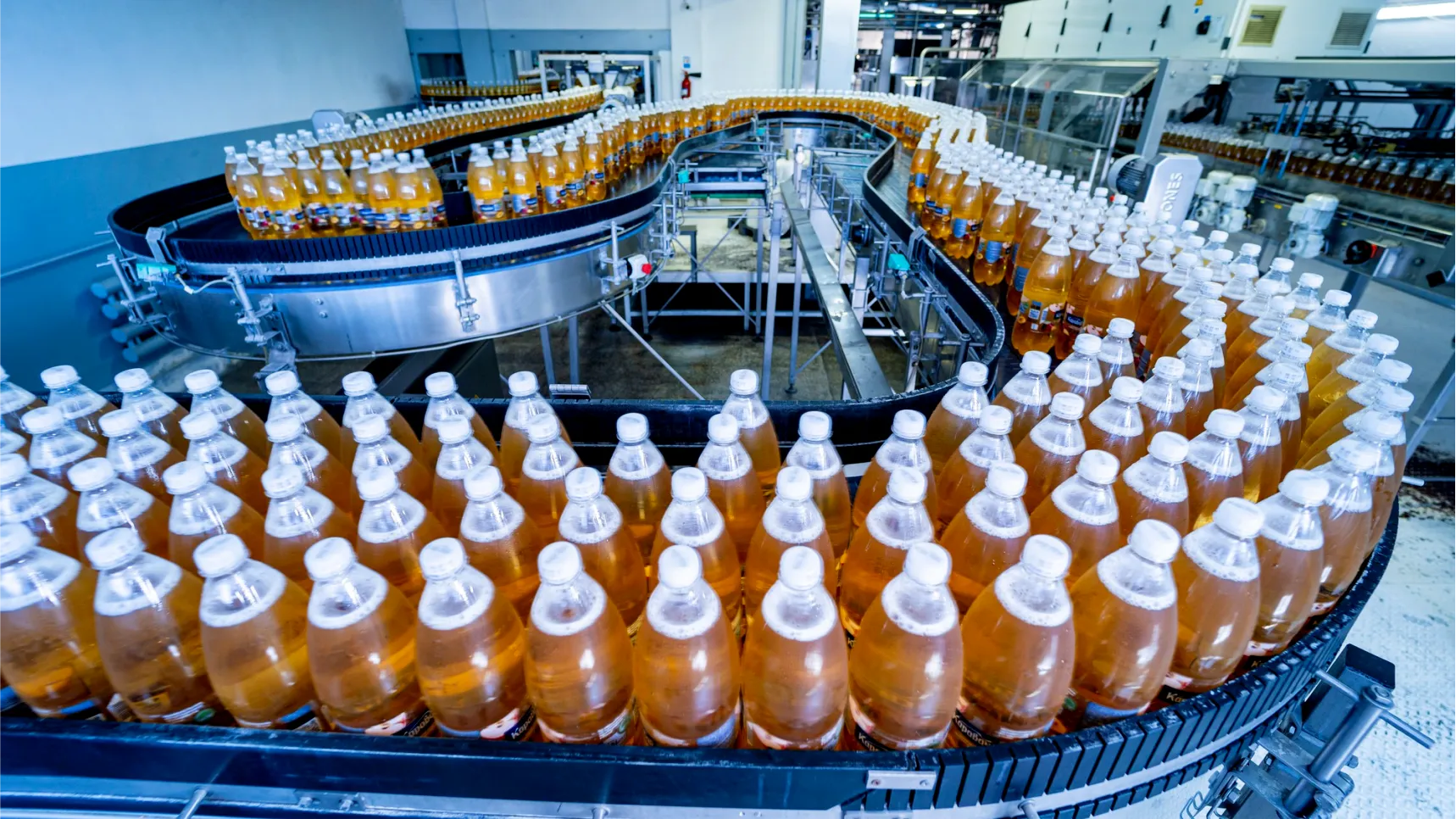
Each summer, India drinks billions of chilled, fizzy beverages – in dhabas, railway stations, kirana stores, weddings, and cricket matches. Every one of those bottles is made by someone.
That somebody might be you.
The Indian carbonated soft drink market passed 35,000 crore in 2024 and has a growth of 8-10% per year. More significantly, Coca-Cola and PepsiCo are no longer the only ones that will grow. The brands of states such as Rajasthan, Uttar Pradesh, Maharashtra and Tamil Nadu are stealing market share silently at a better margin since they are locally based, travel faster and better know their customers than any national brand in their country.
New entry is open. However, establishing a plant without having the whole picture in mind as to machinery, costs, processes and pitfalls is how entrepreneurs can lose their money in a short period of time.
This guide provides you with such a picture. Estimates are not made on a whim, nor are there cop-out deflections of consulting an expert. Real decisions, real process, real numbers.
First, Understand What You Are Actually Building
A soft drink carbonate plant is not a machine. It is a system – five linked stages that have to operate in a series at a steady rate without the product being broken anywhere along the line.
Complete Process Flow:
Water Treatment → Syrup Preparation → Carbonation → Filling & Capping → Labelling & Packaging
Every step possesses its own equipment, its own possible failures and its own quality control gates. Any stage that is skipped or where corners are cut will impact all the bottles that follow. This is what makes plant design and choice of machines more important than most entrepreneurs would have first thought.
We will take a look at each of the stages.
The Carbonated Soft Drink Manufacturing Process: What Actually Happens Inside the Plant
Stage 1: Water Treatment — The Foundation Everything Else Rests On
Assuming your water is wrong, then you have the wrong product. It is too late to salvage a defective batch.
Raw water (a borewell or city supply) will contain dissolved salts, chlorine, bacteria and suspended solids. All these do not belong in soft drink. An effective water treatment system will subject the raw water to several processes:
- Sand filtration (removes suspended solids)
- Activated filtration (removes odour and chlorine)
- Water softener (lessens hardness)
- Reverse Osmosis (RO) (removes TDS)
The result is neutral, clean, odourless water, the staple ingredient in each batch that you make.
One of the most widespread mistakes that are the most costly to make is cutting costs here by new owners of the plants. Water of poor quality causes:
- Off-tastes
- Shelf-life failures
- FSSAI compliance issues
Capacity of the plants: 1,000 to 10,000+ litres per hour (depending on the speed of the line)
Stage 2: Syrup Preparation – The Stage Your Product Identity Is Formed.
This stage is where your drink acquires its taste, sweetness, colour and character.
Heat in treated water In SS 316 jacketed syrup preparation tank with the following:
- Internal stirrer
- Heating coil
Process flow:
- Sugar is dissolved in hot water.
- Refractometer is used to check the level of Brix.
- It adds flavour, acids (like citric acid), preservatives and colours.
- Syrup is chilled and filtered
The importance of chilling: Warm syrup becomes carbonated in the subsequent step.
Each flavour possesses its own formula. Consistency in this case = brand trust.
Stage 3: Carbonation – The Science Which Makes It Soft.
The dissolution of CO₂ gas into the beverage under controlled conditions is referred to as carbonation.
Process:
- Untreated water mixed with syrup in proportion.
- Floated over carbonation unit (carbonator)
- Under pressure injected CO₂
Key factors:
- Solvent: 2-4 °C (CO₂ is soluble in this temperature range)
- Carbonation level: 3.5–4.5 volumes
New systems contain the following:
- Inline CO₂ flow meters
- Pressure sensors
This ensures:
- Consistency
- Real-time control
- Reduced product variation
Stage 4: Filling & capping, where Speed and Precision have to coexist.
This stage is the most severe for the plant.
The liquid passages into an RFC Machine (Rinsing, Filling & Capping):
- Bottles are rinsed
- Filled under counter-pressure
- Capped instantly
Why counter-pressure matters:
Does not lose CO₂ to the atmosphere → does not make flat beverages.
Possible risks otherwise:
- Flat product - Pressure drop.
- Poor capping: leakage or pollution.
Machine speeds:
- Entry level: 1,500 BPH
- Industrial: 30,000+ BPH
Your BPH has a direct effect on:
- Output
- Revenue
- Labour cost
Stage 5: Labelling and Packaging- The Stage that the Customers see.
No matter how good the product is, it will not sell well in a bad package.
Process:
- Bottles travel with conveyor.
- Label applied (OPP or PVC sleeve)
- Bottles (6/12/24 packs) are filled by shrink-wrap machine.
- Heat tunnel shrink wrapping.
Compliance requirements (FSSAI):
- MRP
- Batch number
- Nutritional info
- Manufacturing details
Final step:
- Cartoning
- Palletising
- Warehouse storage
Machinery You Need: A Consensus List.
|
Machine |
Function |
Key Spec |
|
Water Treatment System |
Filtration + RO |
TDS <10 ppm |
|
Syrup Preparation Tank |
Mixing & heating |
SS 316, 500–5000L |
|
Carbonation Unit |
CO₂ injection |
Temp 2–4°C |
|
RFC Machine |
Rinse, fill, cap |
BPH capacity |
|
Labelling Machine |
Apply labels |
OPP/sleeve compatibility |
|
Shrink Wrap Machine |
Packaging |
Heat tunnel |
|
CO₂ Storage System |
Gas supply |
Pressure control |
|
Conveyors |
Bottle movement |
Line sync |
Critical machines:
- Carbonator
- RFC Machine
These control the quality of products and efficiency of plants.
How Costly is a Soft Drink Plant in India? (2026)
Small Scale (1,500–3,000 BPH)
- Machinery: ₹25–40 Lakhs
- Civil Work: ₹10–15 Lakhs
- Utilities: ₹3–5 Lakhs
- Licensing: ₹2–3 Lakhs
- Working Capital: ₹8–12 Lakhs
Total Investment: ₹48–75 Lakhs
Medium Scale (5,000–10,000 BPH)
- Machinery: ₹80 Lakhs–1.5 Crore
- Infrastructure: ₹25–40 Lakhs
- Utilities: ₹8–12 Lakhs
- Licensing: ₹4–6 Lakhs
- Working Capital: ₹20–35 Lakhs
Total Investment: ₹1.4–2.4 Crore
Large Scale (15,000–30,000+ BPH)
- Machinery: ₹3–7 Crore
- Infrastructure: ₹80 Lakhs–1.5 Crore
- Utilities: ₹30–60 Lakhs
- Licensing: ₹8–15 Lakhs
- Current Assets: ₹60 Lakhs-1.2 Crore.
Total Investment: ₹5–10 Crore
The Profit Math: The Real Per-Bottle Earned.
The price of a 500 ml bottle:
- Bottle + cap + label: ₹3.5–4.5
- Ingredients (sugar, CO₂, flavour): ₹2.5–4.5
- Power & labour: ₹1.5–2.5
- Overheads: ₹1–2
Total Cost: ₹8.5–13.5
Revenue:
- Distributor price: ₹16–22
- MRP: ₹20–30
Net margin: ₹5–8 per bottle
Example:
- Production: 6,000 BPH × 8 hours = 14,400 bottles/day
- Profit: ₹72,000 – ₹1,15,000/day
ROI Timeline:
- Small: 18–30 months
- Medium: 24–36 months
- Large: 30–48 months
Six Things That Make the Difference between Thriving and Floundering Plants.
- Location: Has a big effect on the cost of logistics.
- Distribution: Good network = increased sales.
- Automation: Saves labour, 30–40% of the cost.
- Branding: Increases margin by 3-5 additional per bottle.
- Machinery Quality: The more uptime, the more profit.
- Packaging Strategy: Cost and positioning effect.
Common Challenges & Solutions
1. Competition with the Large Brands.
Focus on:
- Regional markets
- Hotels, caterers (institutional sales).
2. Inconsistent Taste
Solution:
- Use refractometer
- Automate syrup mixing
3. High Electricity Cost
Solution:
- Energy-efficient compressors
- Solar power integration
4. Rising Packaging Cost
Solution:
- Long-term supplier contracts
- Use glass bottles that are reusable.
The importance of Your Machinery Partner.
A manufacturer should have the following:
- Turnkey solutions
- Custom plant design
- After-sales support
- Compliance guidance
This reduces:
- Setup errors
- Delays
- Financial losses
In summary: The Opportunity Is Real.
The Indian soft drink market is not mature; it is developing.
Local manufacturers are prevailing as they
- Move faster
- Understand local demand
- Operate efficiently
A profitable plant can be planned very well as long as you
- Select the appropriate capacity.
- Invest in quality machinery.
- Build strong distribution
Planning is the difference between success and failure.
Take the First Step
Get in touch with JPEE Engineers to
- Plant design
- Cost estimation
- Turnkey setup
Start smart. Scale fast. Build profitably.
Primary keywords: carbonated soft drink plant setup · soft drink manufacturing plant cost in India · soda plant machinery · carbonated beverage manufacturing process · soft drink business profit margin
Secondary keywords: soda bottling plant · beverage processing plant · carbonation machine · PET bottle filling line · beverage industry investment
