
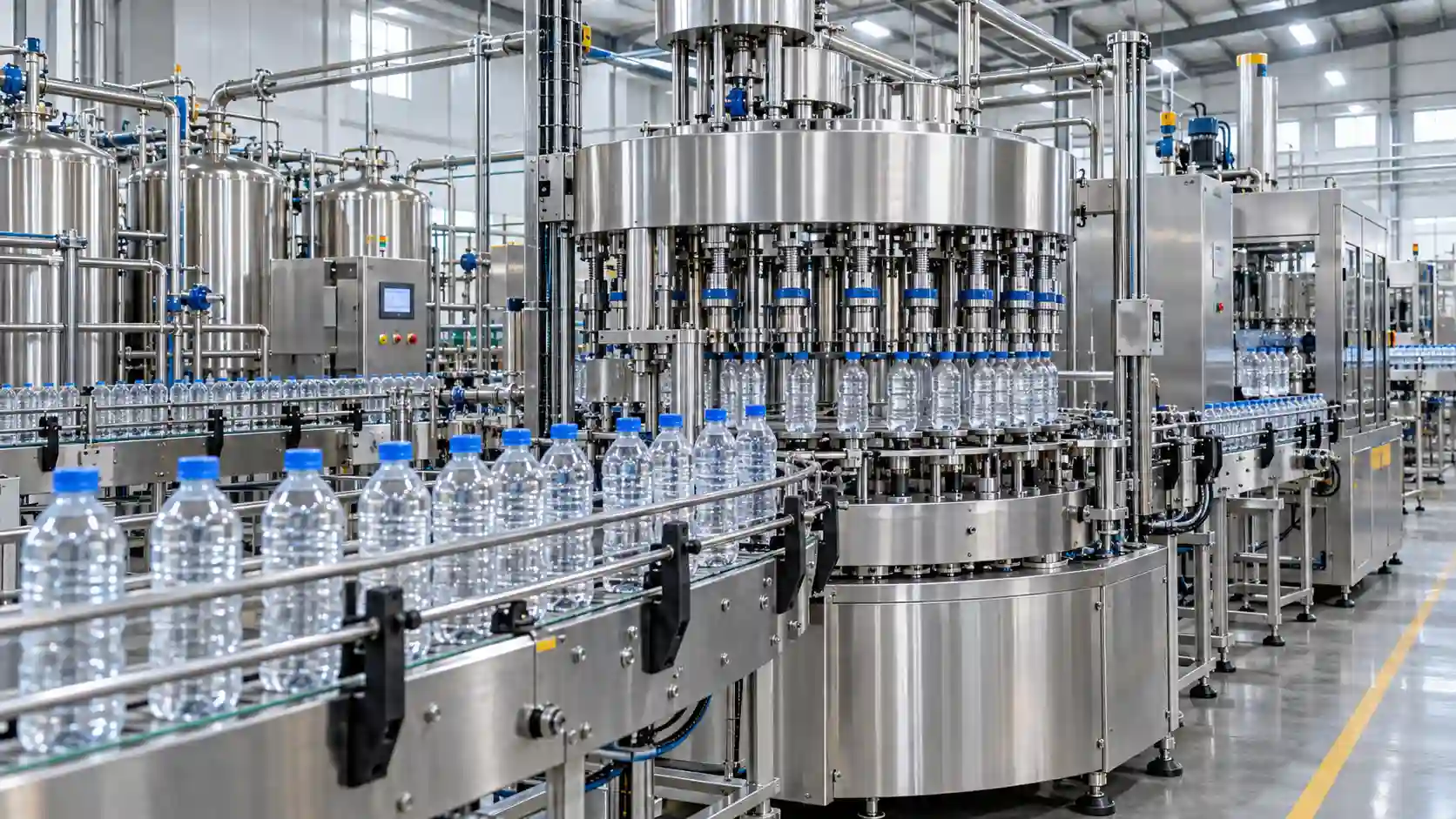
It is essential to have a well-thought-out strategy and the right equipment and technical assistance for a bottled drinking water system. The choice of a packaged drinking water plant manufacturer will influence the efficiency of production, the quality of the water, its uniform packaging and the costs of manufacturing. The below production capacities, technologies, automation, installation and after-sale support are necessary things to assess before making an investment. These are crucial aspects to consider and make sure that the buyer purchases a piece of equipment suitable for his needs.
Know Your Packaged Drinking Water Plant Requirements
Each water bottling company has their own production and packaging requirements. Prior to calling the manufacturer(s) make estimates for needed quantity, space and water source and investment. The right packaged drinking water plant should be designed to meet the needs of your business and not bog you down with unnecessary equipment or capacity.
Take into account what is needed:
- Production volume: Estimate the production volumes as well as sales volume per day.
- Bottle and jar sizing: Decide on the sizes of bottles and jars along with their packaging types.
- Available space: Provide space for treatment, filling, storage and packaging.
- Raw Water Source: Schedule lab tests before purchasing treatment equipment.
- Investment budget: Machine, installation, utilities and working capital.
- Extension: See if it's necessary to expand later.
This data aid the manufacturer to design a suitable plant configuration.
Determine the Needed Production Capacity
Production capacity must be consistent with the level of demand and hours of operation. There is a considerable gap between the capacity of treatment in litres per hour and filling rate in bottles per minute.
Before coming to a conclusion on capacity:
- Balance the treatment process and filling line capability
- Make provision for maintenance and cleaning
- Consider seasonal demand and future expansion plans
The waste will be minimized through the balanced production line.
Go for Semi-Automatic or Fully Automatic Systems
Select semi-automatic or automatic systems.
Affected aspects of automation include production speed, labour needs and initial investment. The option will rely on your business size and operational requirements.
- Semi-automatic system: Suitable when there is a requirement for greater manual intervention in the process.
- Automatic system: Reduced manual intervention required for mundane tasks and the system can possibly cope with increased production levels.
- Expandable system: Possibly capable of being expanded as needs arise.
Compare actual machine specifications rather than production speeds advertised.
Check the Manufacturer's Experience and Technical Expertise
A water bottling plant manufacturer with experience should have knowledge on water treatment, filling machines and packaging. Previous projects offer buyers a means of determining the capability of a supplier to handle the technical demands of their proposed facility.
J.PEE Engineers offers water treatment, bottling and packaging solutions. Before choosing a company, check out the different types of equipment the company offers, what projects they can handle, and what services they provide.
Check the following points:
- Experience with similar bottling projects.
- Technical drawings and equipment specifications.
- Integration of treatment and packaging machinery.
- Previous customer references.
- Supply of spare parts and technical support.
The coordination of the entire system by a supplier may be as crucial as the quality of the individual machines.
Evaluate the Complete Water Treatment Process
The treatment system should be based on the tests of the raw water and desired finished quality. A packaged drinking water treatment plant can consist of multiple treatment stages depending on the source water and the applicable standards.
Common components include:
- Sands or multi-media filtration – reduces suspended particles.
- Activated carbon filtration: Removes chlorine and odour as well as some organic impurities.
- Reverse osmosis (RO): Removes dissolved substances when necessary.
- Micron filtration: Provides further particle filtration.
- UV treatment: Helps control microorganisms.
- Ozone treatment: May be used as an extra disinfection process.
- Treated-water storage: Storage of water prior to filling.
A uniform sequence of treatments is not necessary for all plants. The manufacturer should provide justification as to the reasons why each component is recommended and how the proposed process will be verified.
Did You Know? “Two water sources may need to be treated with different systems, due to the varying dissolved matter and microbiological content.”
Supervise Quality and Construction of Machines
Packaged drinking water plant machinery is a crucial factor in the quality of the packaged drinking water that leads to operational reliability, hygiene and maintenance requirements. When purchasing construction materials, buyers should consider the control system as well as ease of access to components that must be cleaned or serviced regularly.
Review before approving the specifications for the machinery:
- Water contacting surfaces: Make sure that the appropriate stainless steel grade is employed.
- Pumps and valves: Check capacity, materials compatibility and maintenance requirements.
- Filling assemblies: Check hygienic design and access for cleaning.
- Electrical panels: Check protection and control specifications.
- PLC automation: Identify what functions are automatically monitored or controlled.
- Access for maintenance: Allow the easy inspection and maintenance of important parts.
Check Filling, Capping and Packaging Integration
Water treatment is just an aspect of a bottling plant. The selected bottles, caps, labelling materials should be efficient for the filling & packaging line. The required output and packaging format should be matched with the required water filling plant.
The production line can consist of:
- Bottle rinsing/filling machines.
- Machine used for capping and sealing.
- Labeling/batch coding systems.
- Conveyor links between production stages.
- Shrink-wrapping equipment and secondary packaging equipment.
Double check the machines that are going to be used in the quote and if the full line can reach the production speed. The compatibility of machines helps minimize delays and the need for manual handling.
Ensure Correct Installation, Commissioning and After-Sales Support
When machinery is properly installed and commissioning it at the correct specs can help ensure it runs properly. Before choosing a packaged drinking water plant manufacturer in India, buyers need to be aware of the support they can count on from them.
Inquire from supplier regarding:
- Installation: Who will set-up and hook-up equipment?
- Commissioning: What testing and trials are included?
- Training: Will operators be provided with operating and maintenance advice?
- Warranty: What is included in it?
- Spare parts: How fast are parts replaced?
- Technical Support: Do you get troubleshooting help after installation?
J.PEE Engineers provides water treatment and bottling solutions along with project related services. Verify in writing the exact installation, commissioning and after sales contract of your project.
Compare Total Project Cost (Not Just Machine Price)
The packaged drinking water plant cost bottling plant is determined by the capacity of the plant, degree of automation, specification of machines in the plant, site conditions, and packaging considerations. Initial cost quotation may lack some vital equipment components.
Calculate the total investment cost, considering the following:
- Treat and filling machines.
- Transportation, installation and commissioning.
- Power, water and other services.
- Filters, membranes and packaging materials.
- Labour, servicing and spare parts.
- Testing and regulatory costs that can be applied.
- Upgrade and extra equipment to be installed in the future.
Get a detailed quotation with information about what is included in the offer, excluded from it, any warranty arrangements, and payment phases. Comparing similarly configured products gives a clearer perspective of the real worthiness rather than simply comparing the numbers.
Questions to Ask Prior to Concluding of a Manufacturer
Before ordering, consult with the supplier about technical and commercial aspects. Written confirmation prevents confusion in installation and operation.
Use this checklist:
- What is the treatment capacity and the filling capacity?
- What are the various stages of treatment?
- What materials are used for components that come in contact with water?
- What type of power supply and site facilities are needed?
- Does installation and operator training come in the package?
- How long will it take for the goods to be delivered?
- What warranties and/or maintenance support are offered?
- What do they do with spare parts and technical issues?
- What are some of the regulatory obligations of the buyer?
Check the answers against the quotation and specifications for equipment and project references prior to final selection.
Conclusion
In choosing an appropriate packaged drinking water plant manufacturer, the following aspects have to be put into consideration: the treatment process, manufacturing capacity, quality of the machine, automation, cost of the project and the after-sales service. Proper analysis will enable companies to acquire a system that will suit their activities in the present and future.
|
Contact J.PEE Engineers provides packaged drinking water plant solutions to fit your production requirements. |
Frequently Asked Questions
Make comparisons on experience of the manufacture, specifications of equipment, technology to be used, and after-sale services. Make requests for previous works' references and quotation lists. Ensure that the equipment is fit for production requirements and standards.
Capacity depends on demand, operating hours, bottle sizes, and potential growth of the business. Compare lph with the number of bottles filled per minute. Maintenance time and packaging should be considered while selecting your plant.
Typical equipment consists of filtration machinery, treatment systems, storage tanks and filling machinery. Other equipment that may be needed depends on production needs – bottle rinsers, capper, labelling, coding machine, conveyors and shrink-wrapping machines. Final configuration will vary according to raw-water quality and packaging formats.
There will be cost differences based on the production capacity, automation, machinery specification, packaging formats, and installation requirements. Other costs of the investment include utilities, transportation, maintenance and applicable regulatory costs. When considering quotations, it is important to take into account itemised quotations rather than just the price of the machinery as this will give a better idea of the total project cost.
The manual handling can be reduced and production can be increased, but a fully automatic system will usually come at a higher cost. If your operation is small, you might prefer the semi-automatic equipment. The appropriate selection is determined by production requirements, employees, budget, maintenance, and future expansion.
Installation, commissioning, operator training and technical assistance are provided by many manufacturers. However, each service provider and contract will have differences. Check warranty and availability of spare parts and maintenance before buying. Buyers should independently verify the applicable licensing, testing and regulatory requirements for their facility.
